
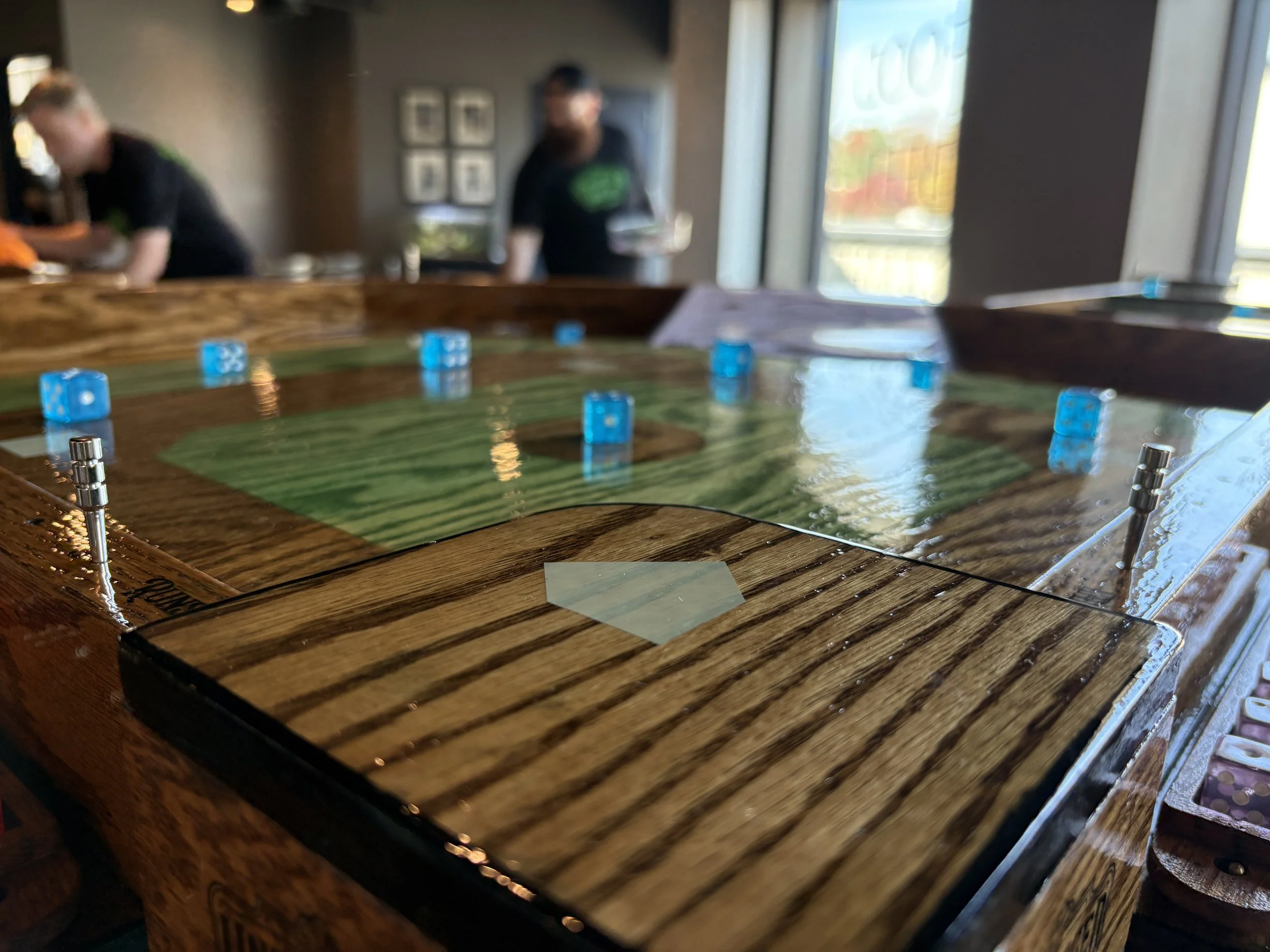


Welcome to the Big Leagues. Our standard, all-ages rules finely balance skill and luck for big, cheering moments every inning. It’s the most fun you can legally have on a baseball field.
The home team takes the field first, placing their 8 dice on the 8 fielding positions. (Sorry catchers, you’re sitting this one out.) Fielders will often get bumped around during play. Do not reset their positions until the start of the next half-inning.
The away team bats first. Batters place a die on home plate and flick it. Where the die lands determines the type of hit, while the number rolled may trigger special modifiers. (See below.)
After resolving the play:
- If the batter is safe, place the flicked die on the correct base and advance all on-base runners accordingly.
- If the batter is out, toss the flicked die into the out gutter.
Then, the next player on the team steps up to bat.
After three outs, teams switch sides, from fielding to batting.
After 9 innings, the team with the most runs wins!
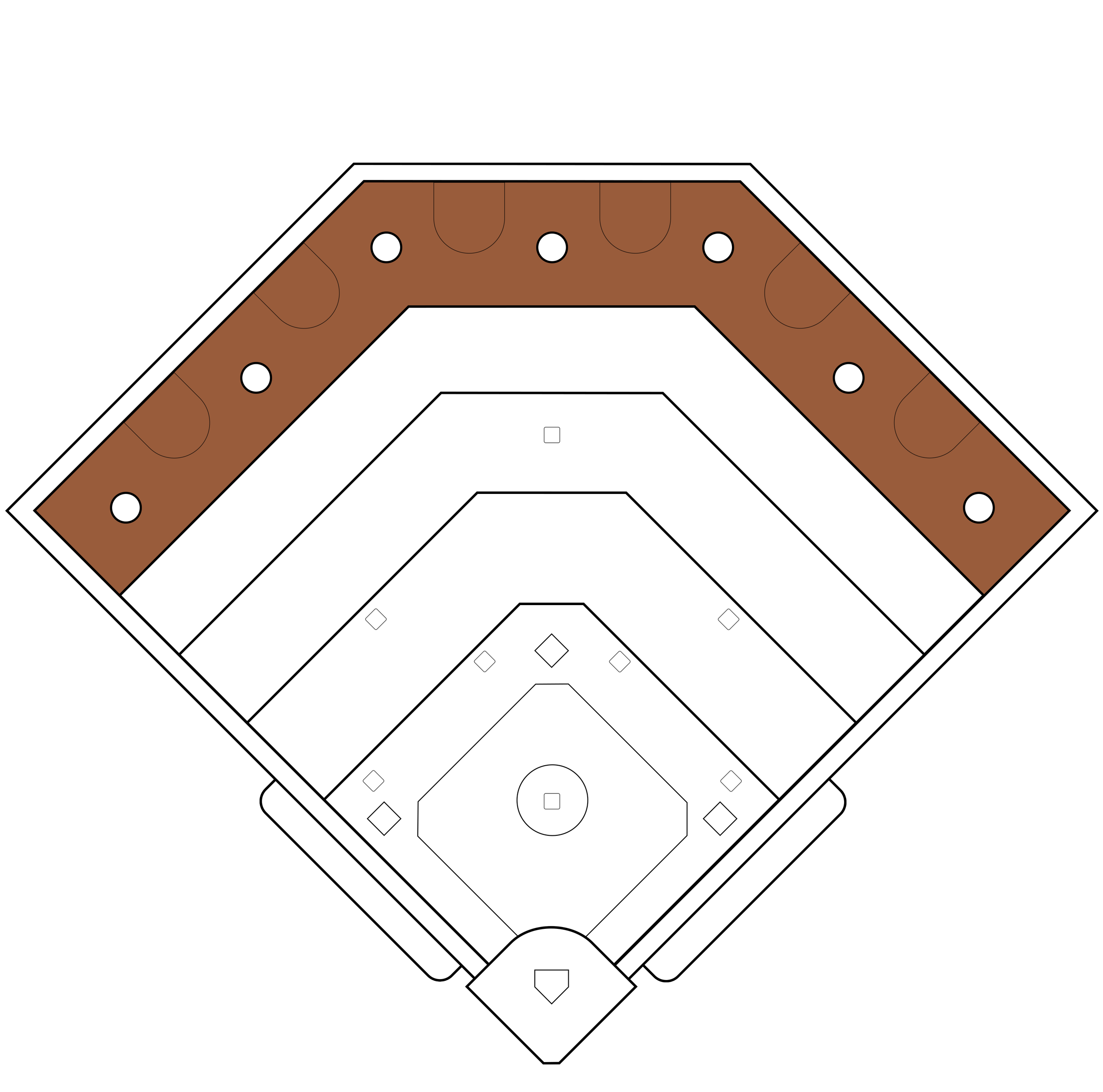
Out
Next batter. 3 outs and teams switch sides.
All outs stay in the gutter to keep track.
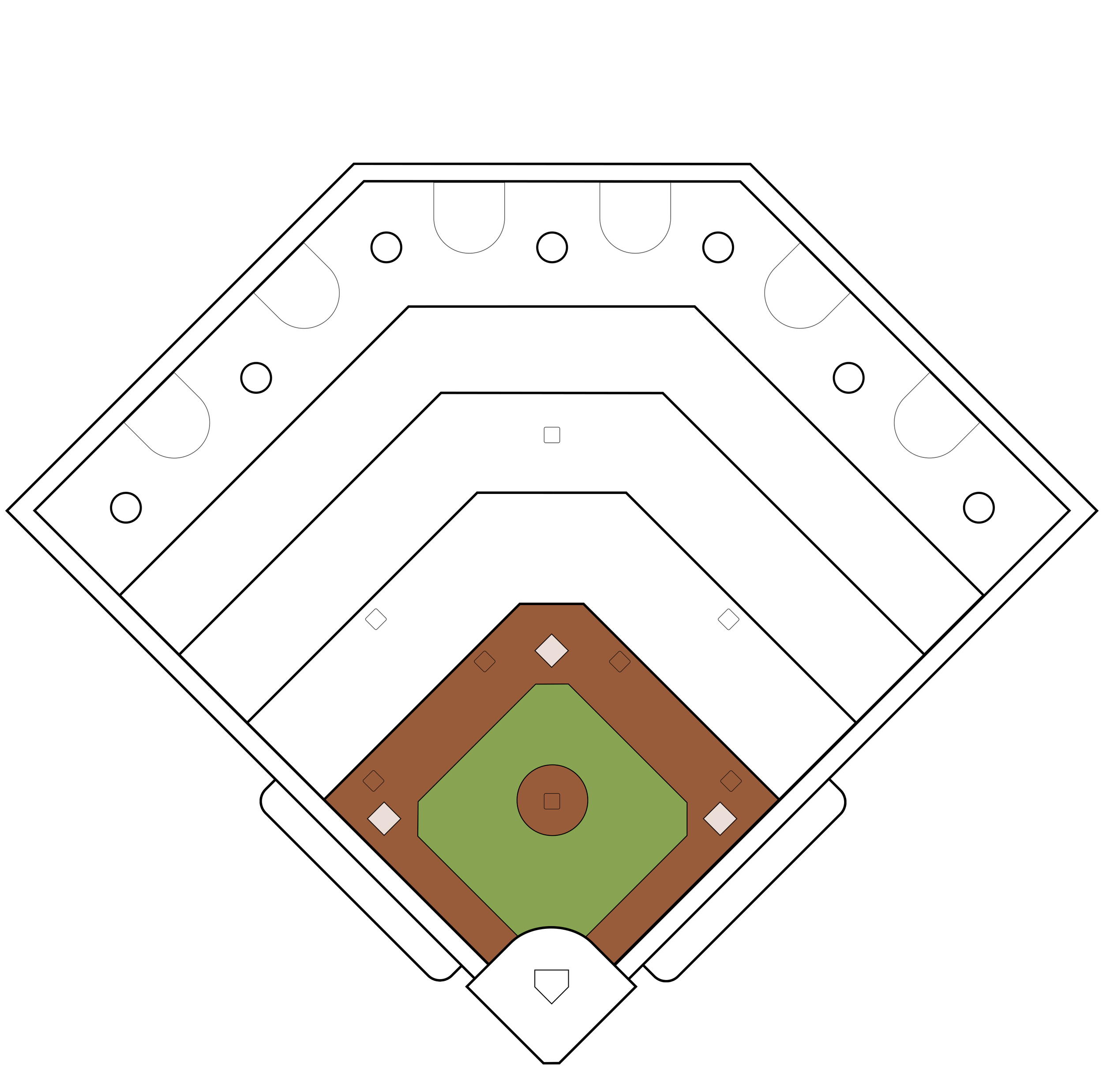
Strike
Try again. 3 strikes and you're out.
Strikeouts get tossed to the out gutter.
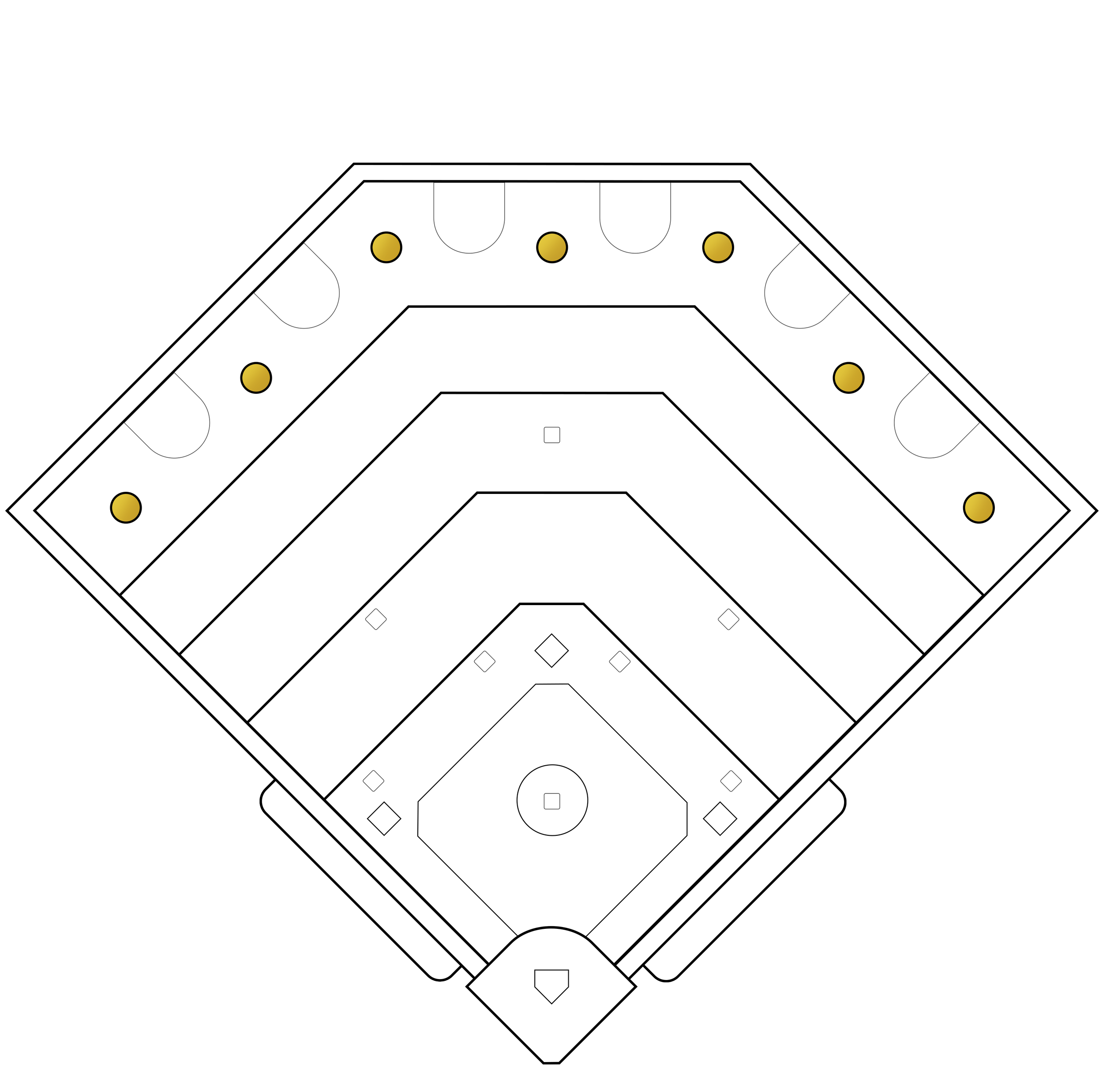
Home Run
Batter and all runners score!
Any portion of the batter die must rest on top of the HR coin, even if just barely.
Ignore face of batter dice.
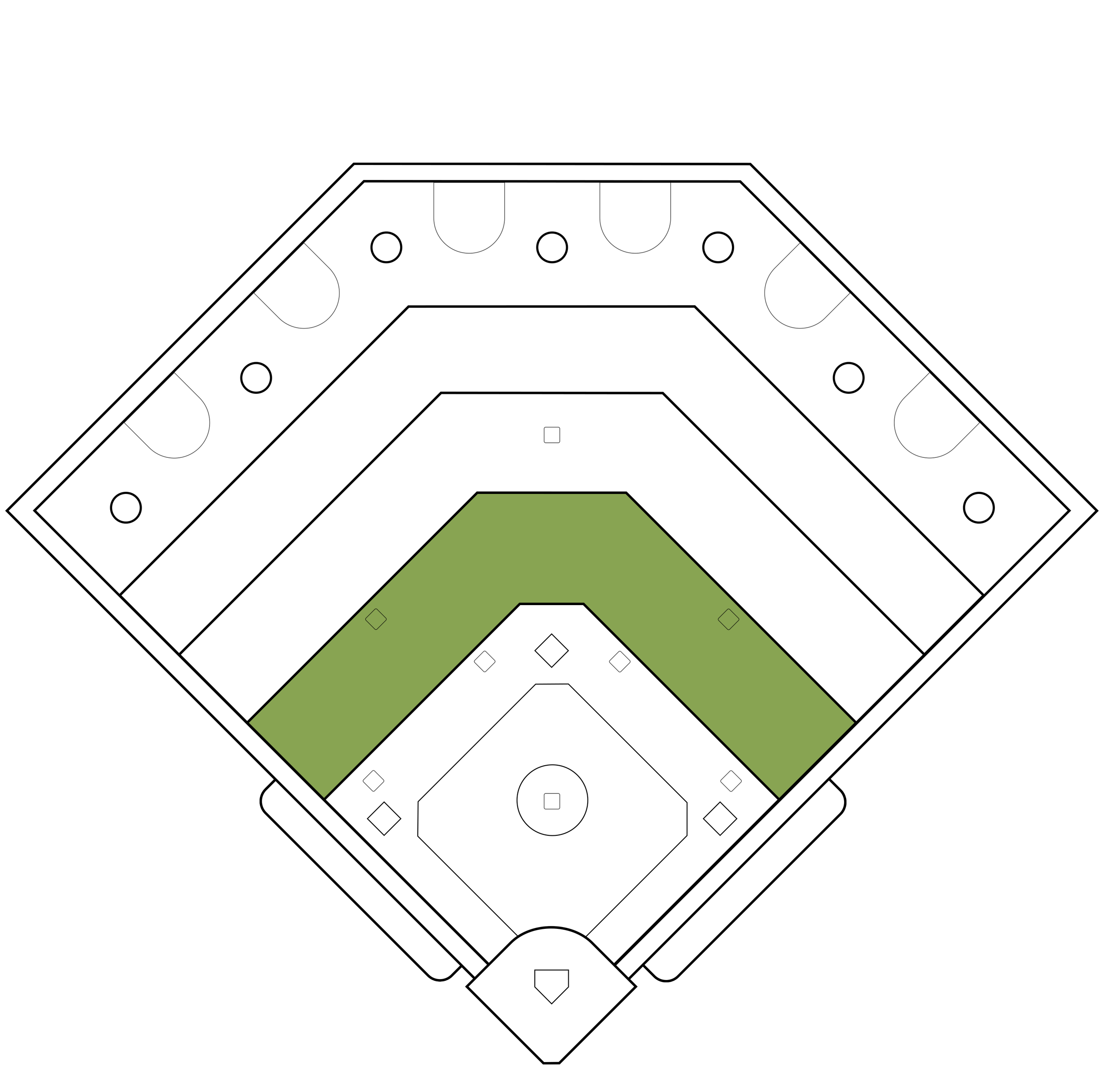
Single
Batter and all runners advance 1 base.
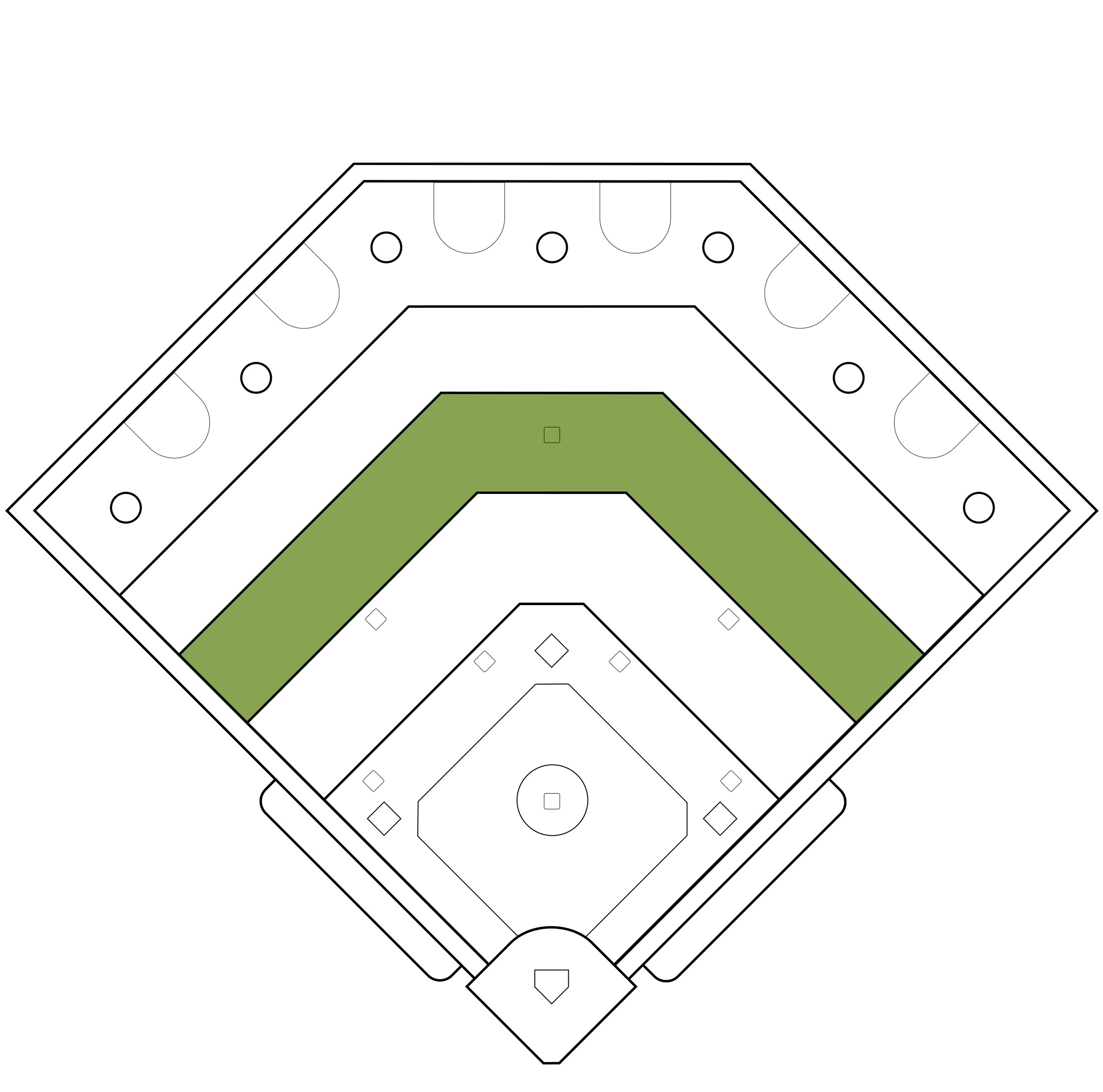
Double
Batter and all runners advance 2 bases.
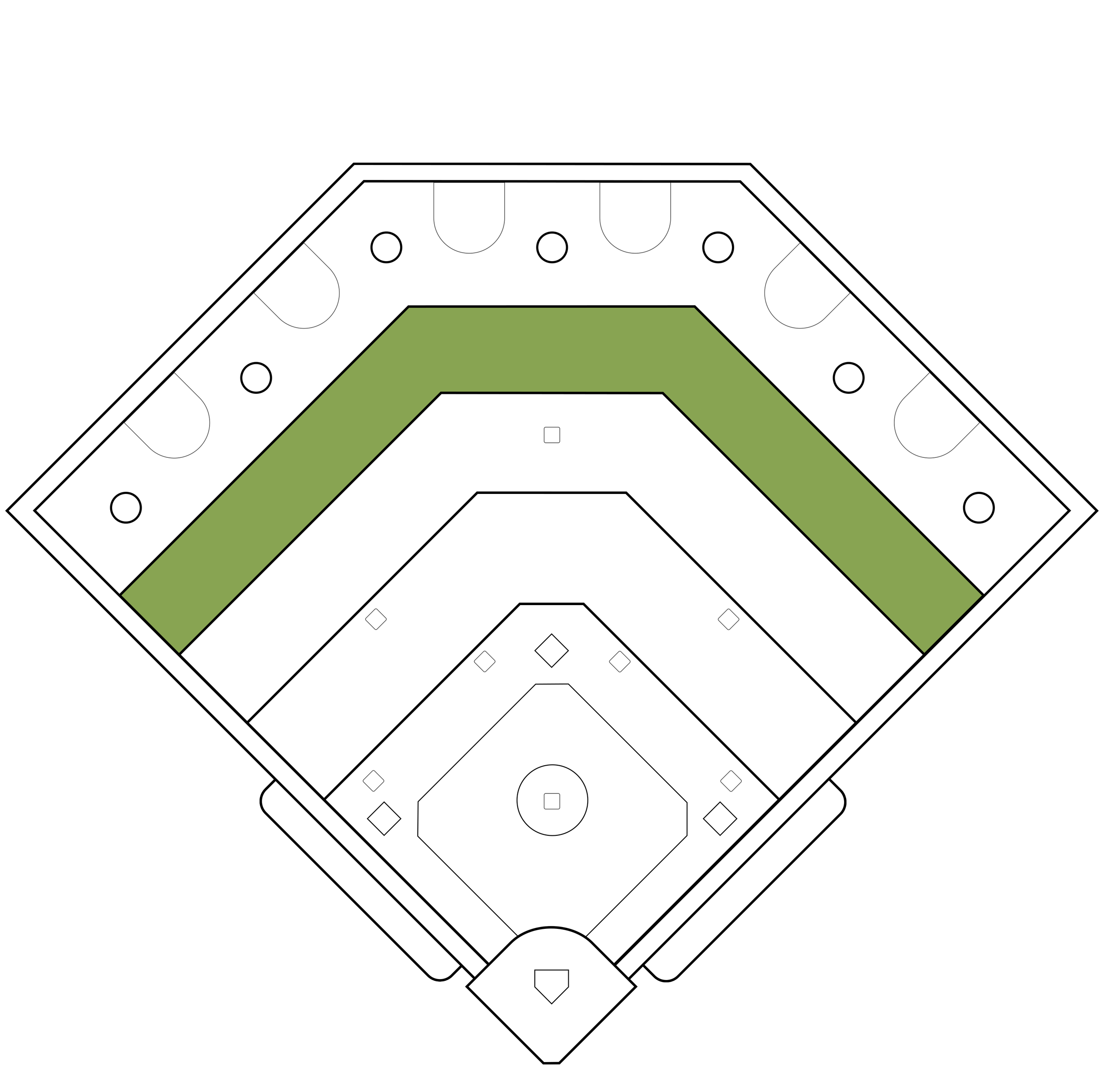
Triple
Batter and all runners advance 3 bases.
Outfield hits must resolve face of batter dice.

Pop Up
Batter is out.
No runners advance.
Toss batter die to gutter.

Fielding play.
Opposing team may flick any fielder die to knock batter die out. The play is then resolved where the batter die lands, ignoring the die face.

Ground Ball

Line Drive
Batter is safe.
All runners advance.

Fielding Error
Batter and all runners advance 1 extra base.
A fielding attempt that knocks any die onto the infield or off the table it is a fielding error. Batter and all runners advance 1 extra base.